Food

A short pack, a bad seal, or the wrong allergen label.

Food lines lose product in ways a scale and a metal detector do not see. Plastic in the product, one light piece missing from a tray, a wrinkle in the seal, or last run's film on this run's product. The station has to see it, get it off the line, and leave a record quality can defend.

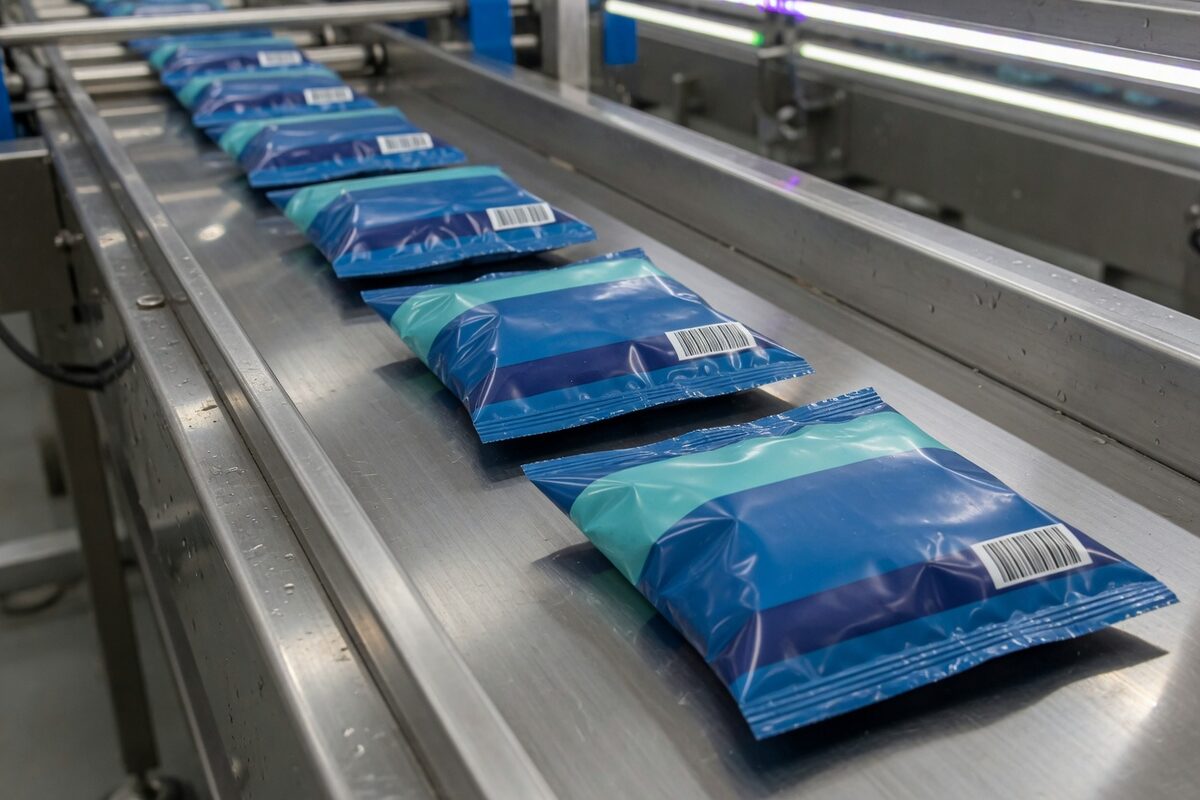
A bad seal on a food line is product caught in the seam, a wrinkle across the jaw, or a close that never finished. The pouch can look shut on the belt and still have product in the seam. A check of one pouch an hour misses the pouches in between. The station looks at the seal on every pack, takes the one that did not close off the line, and keeps that image with the lot so the sealer can be corrected before the next shift. A leak that only shows up under a pressure or dye test is not a camera job.

On the line

What goes wrong.

These are the five faults we get called for. Fill and a missing piece are counts and measurements. A piece that is not metal, a seal that almost closed, and last run's film are judgments of what the plant still ships. The escape happens in the gap between the machine you already have and the reject.

Select a fault. The pictures show what we reject, and what still ships.

Foreign material is getting into product
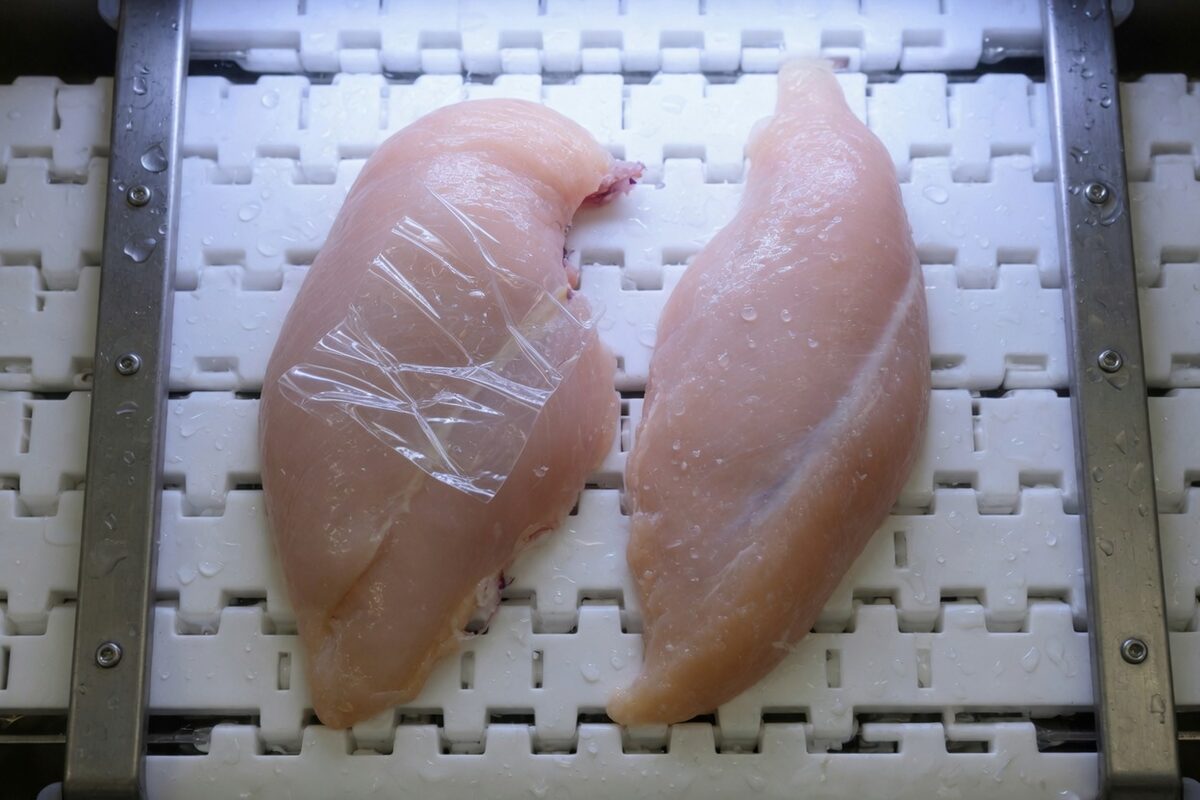
Two raw chicken breasts with a scrap of clear plastic film on one
The fault. Plastic on the chicken. A metal detector has nothing to trip on.
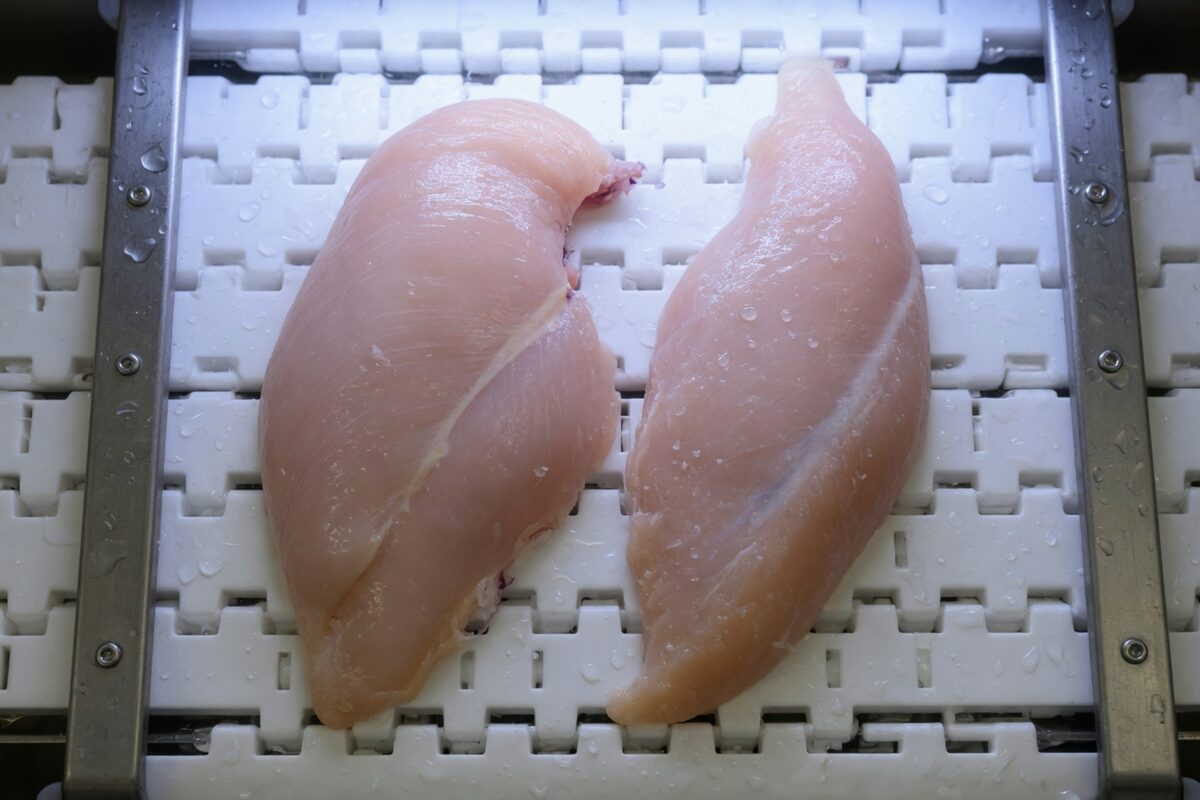
Two raw chicken breasts with no plastic on them
Still good. Chicken only. There is no plastic piece to miss.

Judgment. A metal detector only sees metal. Plastic, a gasket, and most bone do not conduct, so they pass it. A thin piece can also look like the product, so the camera is shown the product the plant ships and the same product with the piece in it.

How we fix it. We match the camera, the lens, and the light to the contaminant you actually need to find, and we fold that result in with the metal detector and the X-ray so the line makes one reject decision. Reject timing is proved until the flagged piece is physically off the belt. Every reject keeps an image with the lot.

Where this fits: Single-camera station · How we inspect
Packs are under- or over-filled

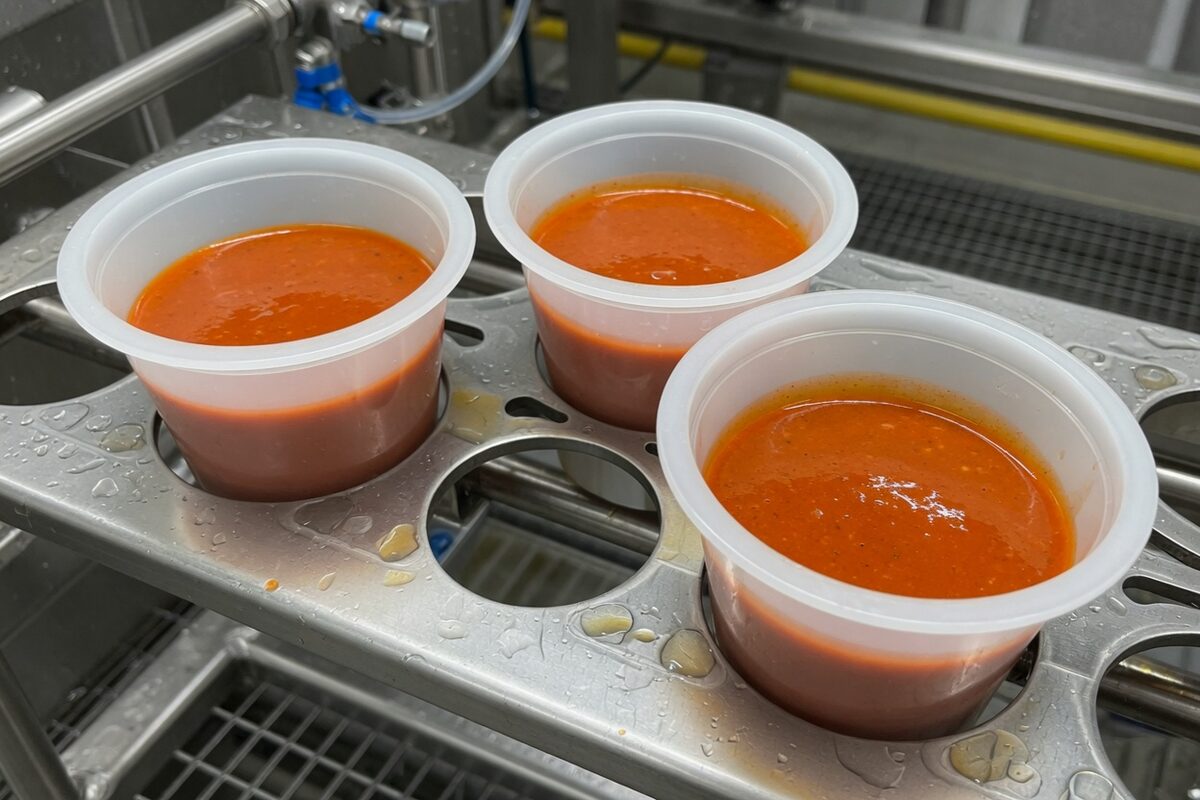
One cup with sauce running over the rim
The fault. The cup is running over the rim.
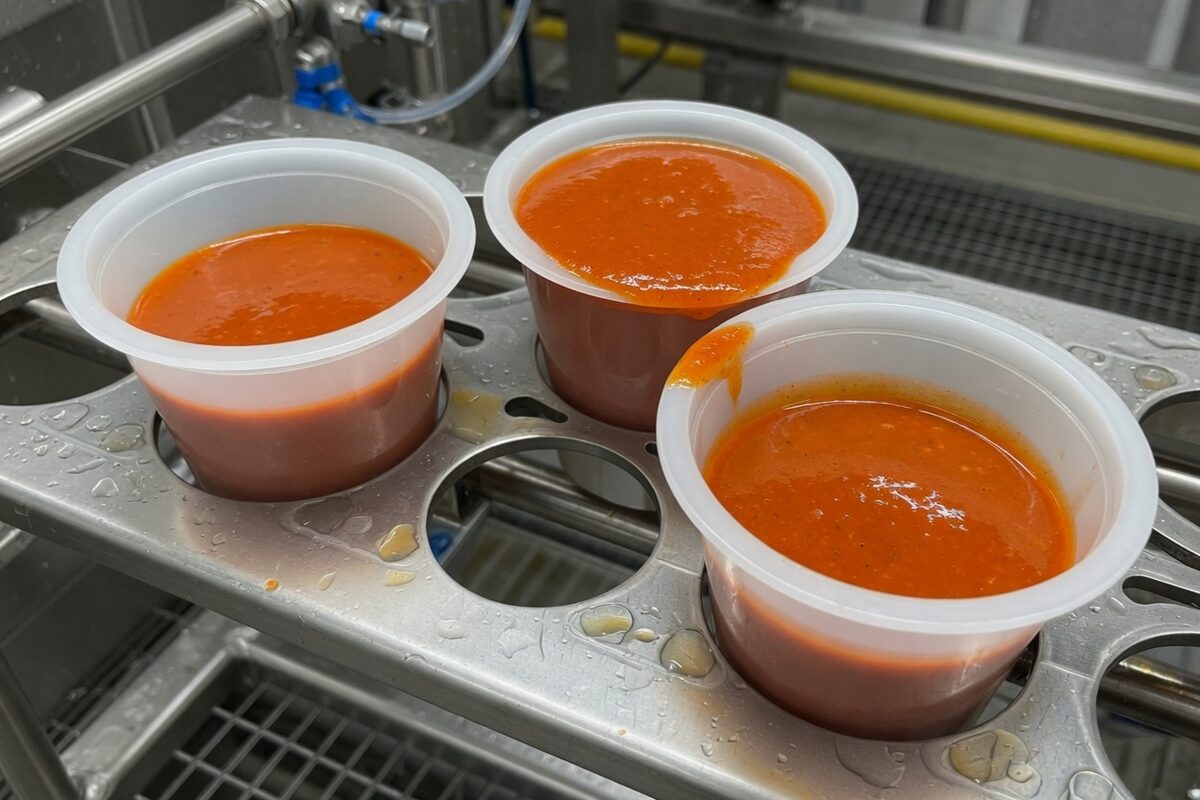
One cup filled to the line under the rim
Still good. The cup stops at the line under the rim.

Measurement. The station compares the level, or the weight, with the limit for that head. A cup over the rim, and a cup that stops at the line, are a drifted valve, not a picture the line has to interpret.

How we fix it. Fill is checked at line speed, by vision or by weight, and the result goes back to the PLC. Drift alarms or trims the filler. Out-of-spec packs are held or diverted without waiting for a person to notice the trend.

Where this fits: Single-camera station

A seal that did not close

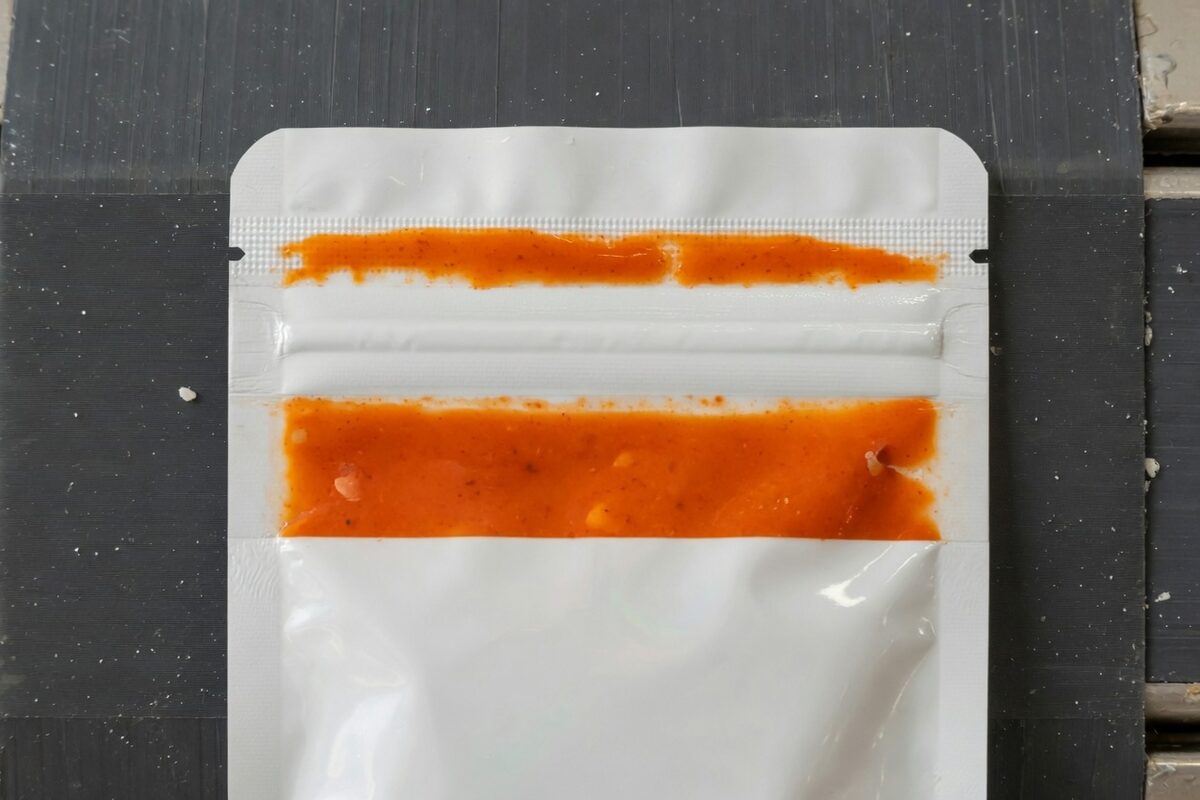
A white pouch with sauce in the top seam
The fault. Sauce is sitting in the seam. That seal never closed.
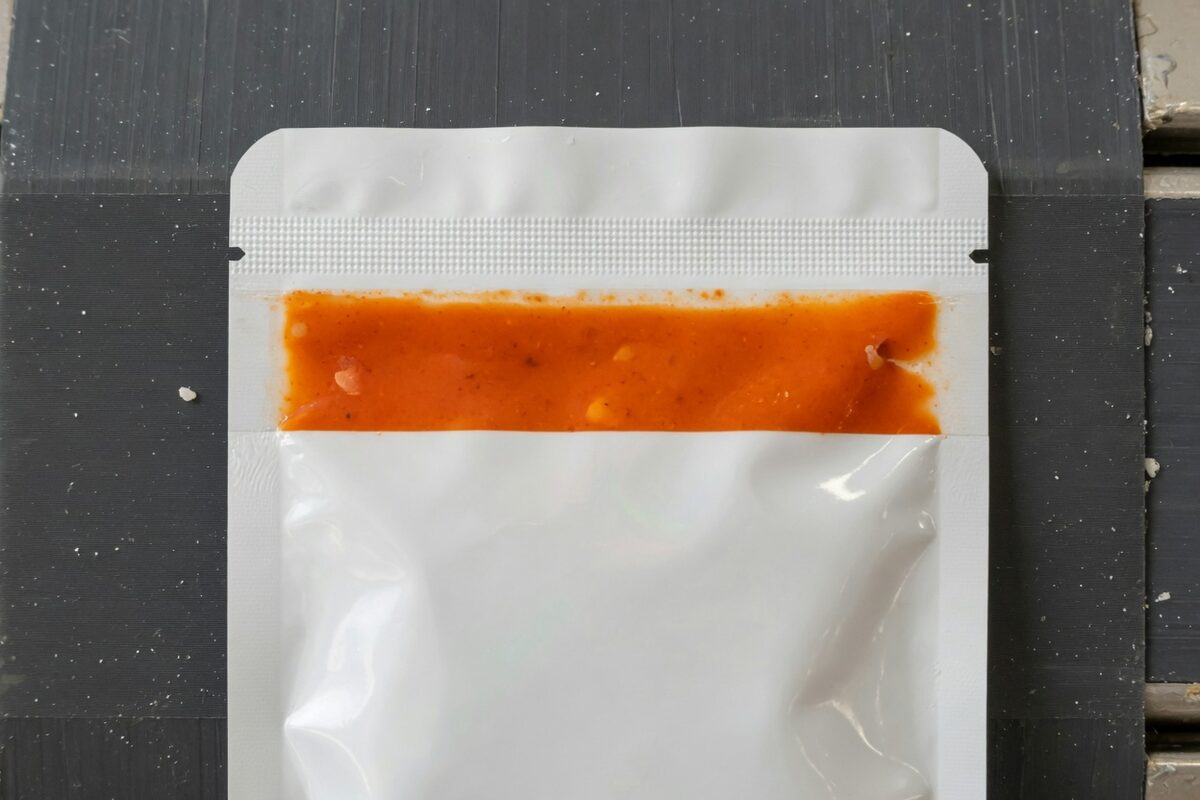
A white pouch with the seam closed
Still good. The seam is closed. The sauce stays in the pouch.

Judgment. A seal the plant still ships and a seal with product in it can look almost the same. The camera is shown both, and it holds that line.

A leak that only shows up under a pressure or dye test is not a camera job.

How we fix it. The camera looks at the seal for wrinkles, contamination in the seal area, and a seal that did not finish. Recurring faults are flagged back to the sealer. The image is stored with the lot and the time, so a drifting jaw shows up before the next shift inherits it.

Where this fits: Single-camera station

Wrong label or allergen mismatch

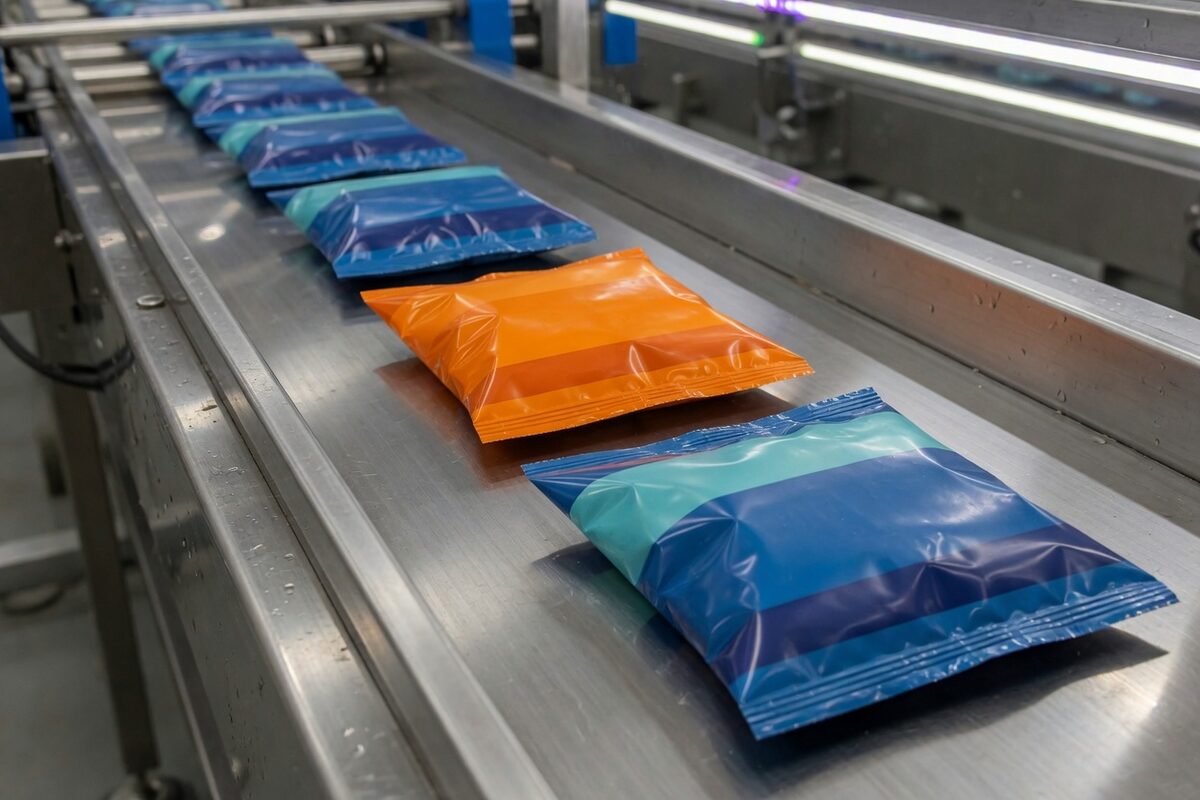
One pouch wrapped in orange film
The fault. This pack is still wearing last run's film.
One pouch wrapped in blue film
Still good. This pack wears the film for this run.

Match to the recipe. The film and the barcode have to be the ones for this SKU. A different film is already the wrong pack, before anyone reads the allergen line.

How we fix it. Label and print are checked against the active recipe, including the text and the barcode. The line will not release the new SKU until the new label has been verified, and a mismatch holds the line. The point is to take the allergen escape out of the changeover, not to catch it in the warehouse.

Where this fits: Barcode station · Barcode tunnel

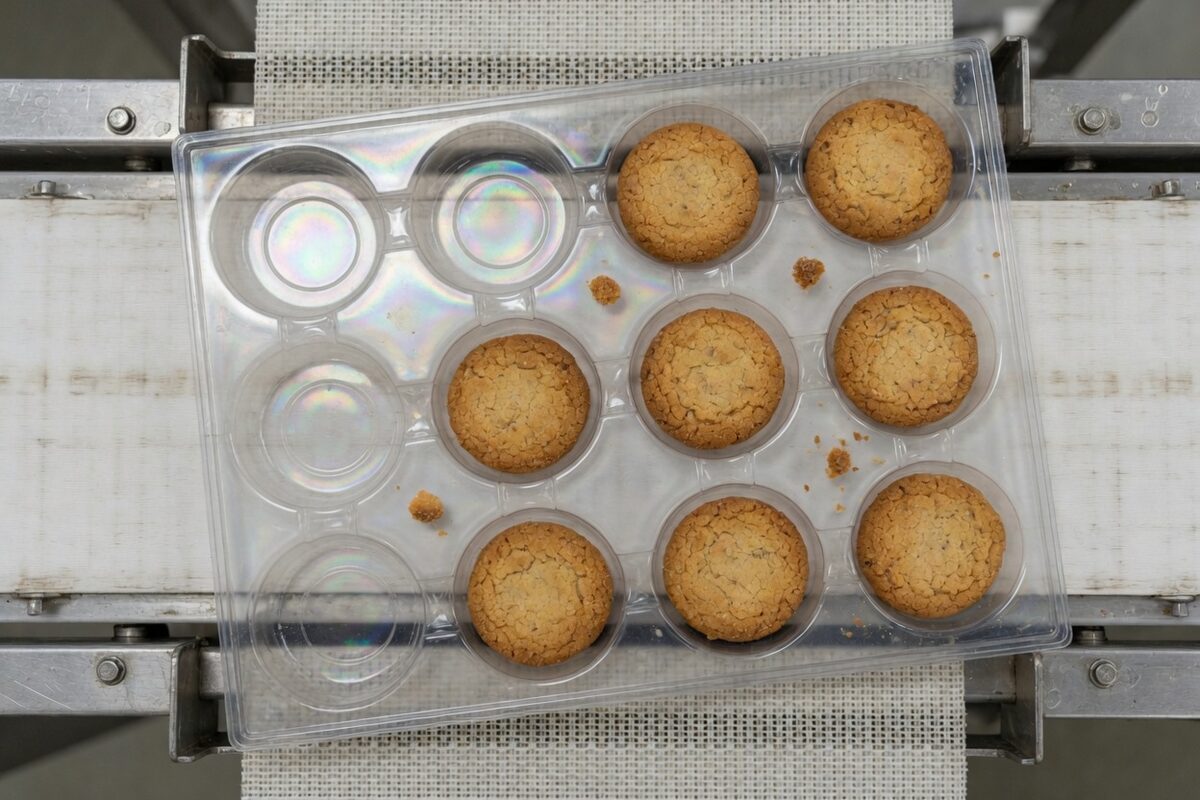
A piece is missing from the pack

A tray of cookies with empty pockets
The fault. Pockets are empty. The scale still calls this a full tray.
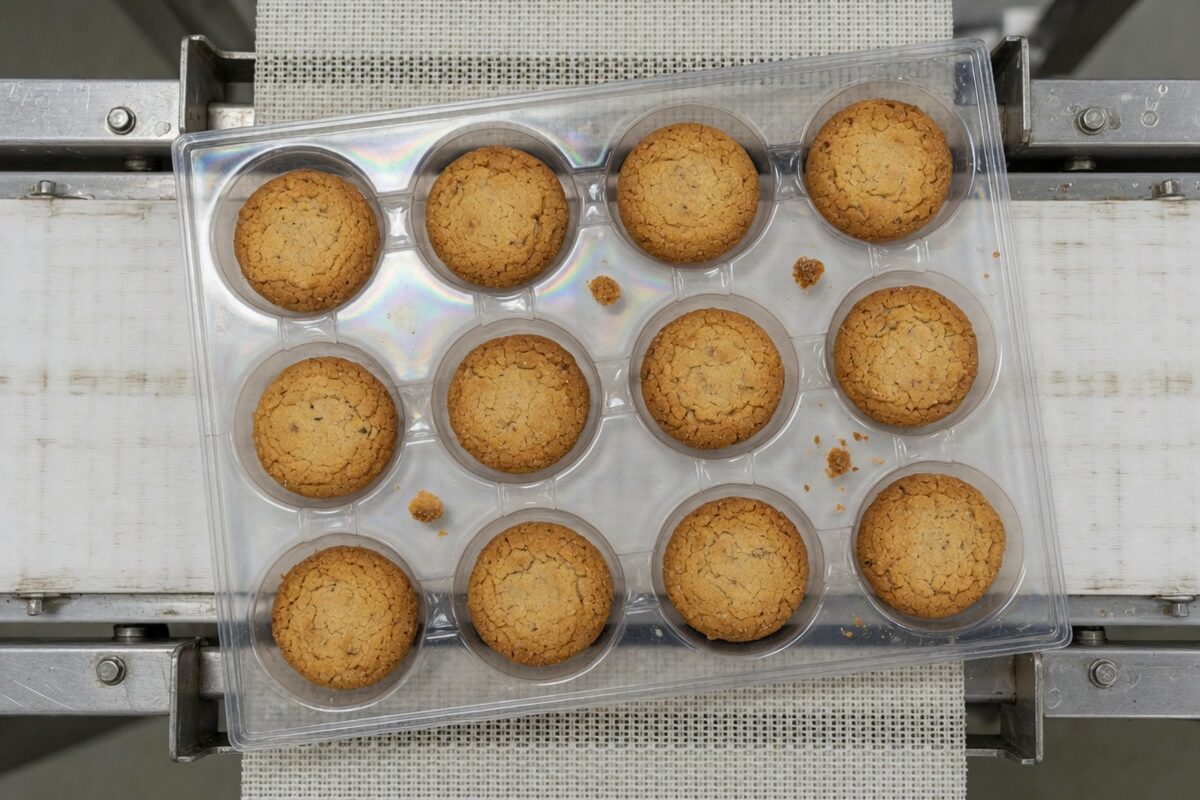
A tray of cookies with a cookie in every pocket
Still good. Every pocket has a cookie.

Count. When the missing piece weighs less than the normal swing of the pack, the scale cannot tell a short pack from a full one. The camera counts the pockets before the lid goes on.

How we fix it. Vision counts the pieces before the lid or the film goes on. A short pack is rejected before it is closed, and the count is logged with the lot. This is a count, separate from the fill-level check.

Where this fits: Single-camera station

The station

How we stop it.

The camera and the light sit in a washdown frame. The reject or the hold happens on the line, and the log stays with the station. A second system in the same plant takes less engineering time because the first one was built to be repeated.

1 · See it

Look where the fault actually is

Open product for foreign material, the seal land for product in the seam, the label for the allergen statement, the tray for a missing piece. One camera aimed at the wrong place will not cover the other four.

2 · Reject it

Get the bad pack off the belt

Reject timing is part of the job, not a setting left over from startup. A flagged pack that is still in the case is not a reject.

3 · Record it

Keep the image with the lot

Quality should be able to reconstruct the shift: what failed, when, and what the camera saw. The record is written before the reject fires.

FDA and FSMA work, including 21 CFR 117 preventive controls, is planned with your quality team on that station. We do not show up with a validation packet and call the line done.

How it works

How inspection works on a food line.

  1. Look where the fault happens. A camera and a light are mounted right after the machine that causes the problem: the filler, the sealer, the tray loader, or the labeler.
  2. Decide pass or fail on every pack. The station compares each pack with pictures of packs your plant ships and packs it rejects. No sampling, every pack.
  3. Get the bad pack off the belt. A pusher or air blast takes the failed pack off the line, or the line holds. We prove the timing until the flagged pack is actually off the belt.
  4. Save the proof with the lot. Each reject keeps its picture, the reason, and the time, filed with the lot, so quality can see what happened and when.

What's included.

One team handles the job from the first sample check to a running station. We choose the camera, lens, and light for your fault, build the control panel, connect the reject to your line, and commission it with your operators.

  1. Vision assessment. A written check of your good and bad parts before any proposal. It tells you what the camera can catch.
  2. Line diagnostic. A later paid dry run of two to four weeks. The station watches real product with its outputs turned off, so nothing is rejected until it is proved.
  3. Install and commissioning. The station goes in on your line and is tested with your operators until it runs.
  4. Washdown-rated build. The camera, light, and enclosure are built to be washed down with the rest of the line.
  5. Support. A yearly care agreement is available. See the system page.

Rules and words

Rules this line plans around.

These are planned with your quality team on the station. The station supports them. It does not replace your own compliance work.

FSMA Preventive Controls (21 CFR 117)
The FDA food-safety rule. Your plant keeps a written food safety plan with controls for hazards, including physical ones such as plastic or metal. A camera reject with a saved record can be one of those controls. Your quality team decides how it fits the plan.
Allergen labeling (FALCPA and the FASTER Act)
The nine major allergens (milk, eggs, fish, shellfish, tree nuts, peanuts, wheat, soybeans, and sesame) must be declared on the label. A pack in the wrong film can carry the wrong allergen statement, which is a recall risk.
GS1 barcodes
The retail barcode (UPC or GTIN) on each pack follows GS1 rules, and the industry is moving to 2D codes. The barcode tool checks a GS1 check digit.

Words on this page, in plain terms.

Foreign material
Anything in the food that should not be there: plastic, a gasket piece, bone, metal.
Checkweigher
The scale on the line that weighs every pack.
Giveaway
Extra product put into a pack beyond the label weight. You give it away for free.
Changeover
Switching the line from one product to the next.
SKU
One specific product and package, for example one flavor in one size.
PLC
The industrial computer that runs the line and receives the pass or fail signal.

What plants are reading

From the trade press.

Three pieces that match the calls we take. They are the trade press, not our results.

Food Safety Magazine · Sep 25, 2026

Plastic is showing up as often as metal.

Food Safety Magazine published FlexXray's 2026 foreign-material benchmark. Plants in the survey say contamination has not slowed down, plastic is now cited about as often as metal, and the usual sources are equipment wear and incoming ingredients. A metal detector was never going to see the plastic.

Food Safety Magazine

Food Safety Magazine · Sep 24, 2026

The seal and a missing piece are inspection problems too.

Mettler Toledo's piece in the same magazine walks through why foreign-material inspection is moving off a single end-of-line machine. X-ray on a packaged product can also see fill, a missing component, and product trapped in the seal. Those are the faults a scale by itself keeps missing.

Food Safety Magazine

Baking Business · Sep 28, 2026

A robot can inspect while it picks.

Bakery and snack lines are putting vision on the robot so it can see an unsorted product and a defect in the same move. The article is about labor. The part that still belongs to the station is the reject, and a record the plant can defend.

Baking Business

Questions

Common questions.

Does this replace our metal detector or X-ray?

No. A camera sees what is on the surface, such as plastic on a fillet. The metal detector and X-ray keep their jobs, and we tie the results together so the line makes one reject decision.

Can a camera find leaks?

It can see a seal with product in it, a wrinkle, or a seal that never closed. A leak that only shows up under a pressure or dye test is not a camera job.

Can you add this to a line we already run?

That is the usual job. The vision assessment tells you whether the fault can be seen where it happens on your line before any proposal.

Can the station be washed down?

Yes. We build washdown-rated stations for food lines, so the camera, light, and enclosure are cleaned with the rest of the line.

Where do we start?

Send good packs and bad packs for a vision assessment. You get a written answer on what the camera can catch before we write a proposal.

Next

Tell us about the line.

Tell us the product, the defect that is getting out, and whether a station is already on the line and failing. We start with a written look at the fault before anyone talks about a quote.

Tell us about the line Line diagnostic

Two raw chicken breasts with no plastic on them