Pharmaceutical

A missing tablet, a wrong leaflet, or a record that will not hold up.

On a pharmaceutical line the inspection record is as important as the inspection. An empty blister pocket, a leaflet for the wrong strength, a serial number that does not match its parent, or a bottle with no desiccant and two cottons. If the reject happens and the reason can be edited later, the batch record is the defect.

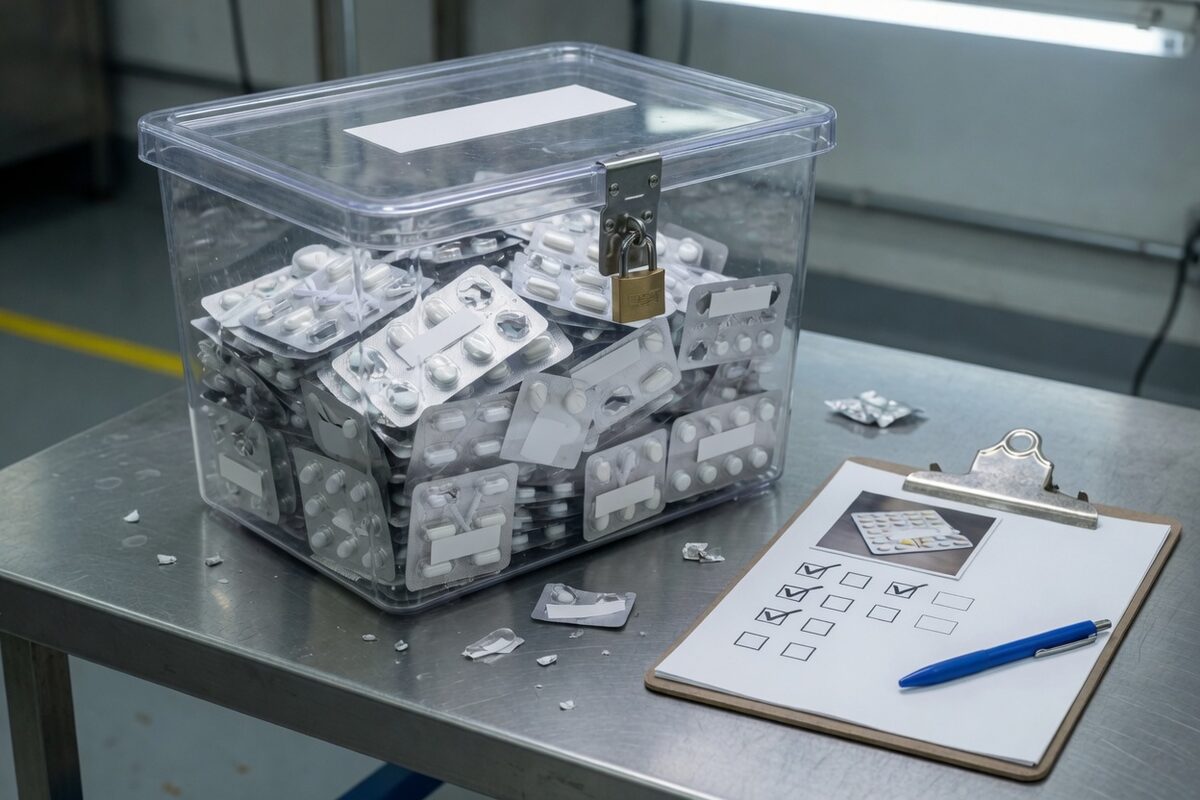
A missing tablet on a pharmaceutical line is an empty blister pocket, or a tablet broken in the pocket next to it. The card can be sealed and cartoned with that pocket empty. A sample pulled at the end of the batch does not see the cards in between. The station checks every pocket, rejects the empty or broken card, and writes the reason with the batch. The camera reads the code into the serialization system the plant already runs. It does not replace that system.

On the line

What goes wrong.

Serialization, the blister, the label and insert, the audit trail, and the desiccant are separate checks. An empty pocket and a missing leaflet are presence. A cracked tablet, and cotton versus a canister, are judgments. The camera reads the code into the serialization system you already run. We do not replace that system. A reject without a stored reason is a record problem, and we do not hand you a Part 11 packet.

Select a fault. The pictures show what we reject, and what still ships.

Serialization and aggregation errors
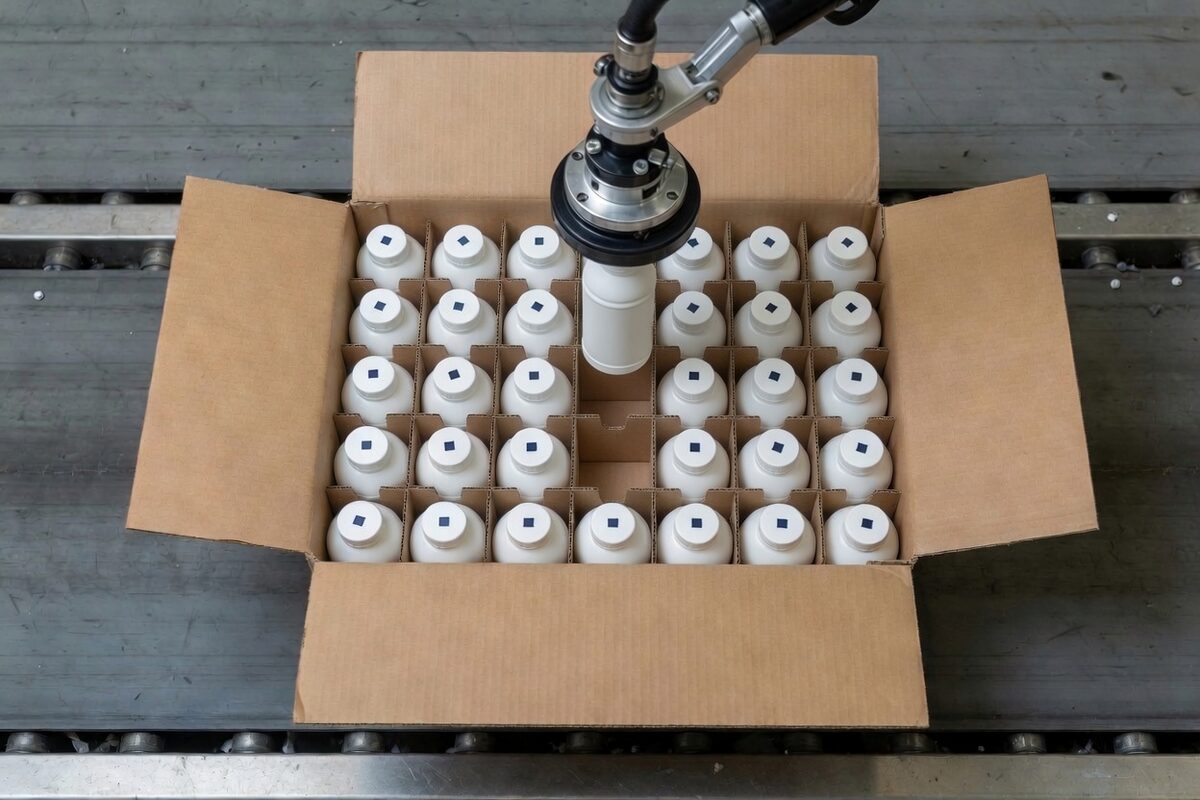
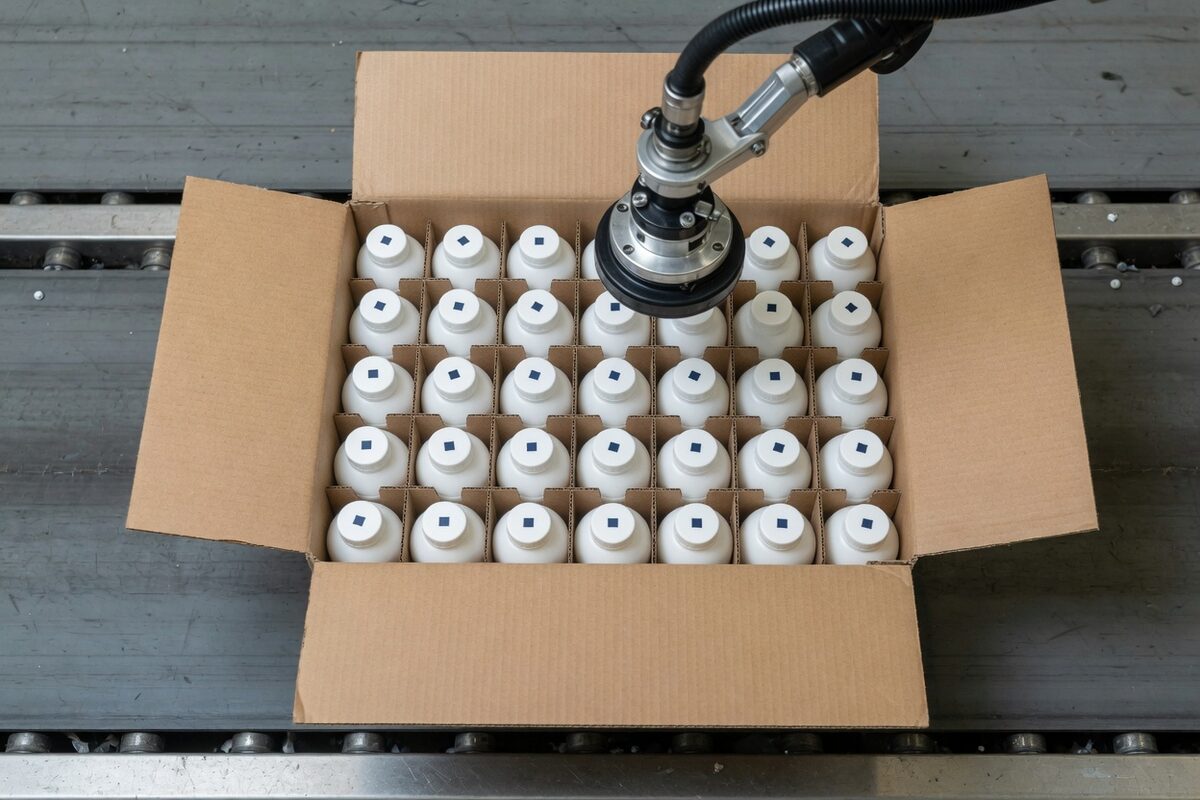
A gripper holding a white bottle above an empty cell
The fault. The unit is in the gripper, out of its cell. The parent-child link has to change with it.
A white bottle seated in a cell with the gripper clear
Still good. The unit is down in its cell. The gripper is clear of it.

Read. The camera reads the code on the unit. The serialization system you already run keeps the parent and the child. We do not replace that system. A unit out of its cell has to leave the record with it.

How we fix it. Code verification is integrated with the serialization system you already run. Aggregation is checked at the case and the pallet. Reject and rework stay consistent with the record, so a removed unit does not remain a child of a case that shipped.

Where this fits: Barcode station · Barcode tunnel
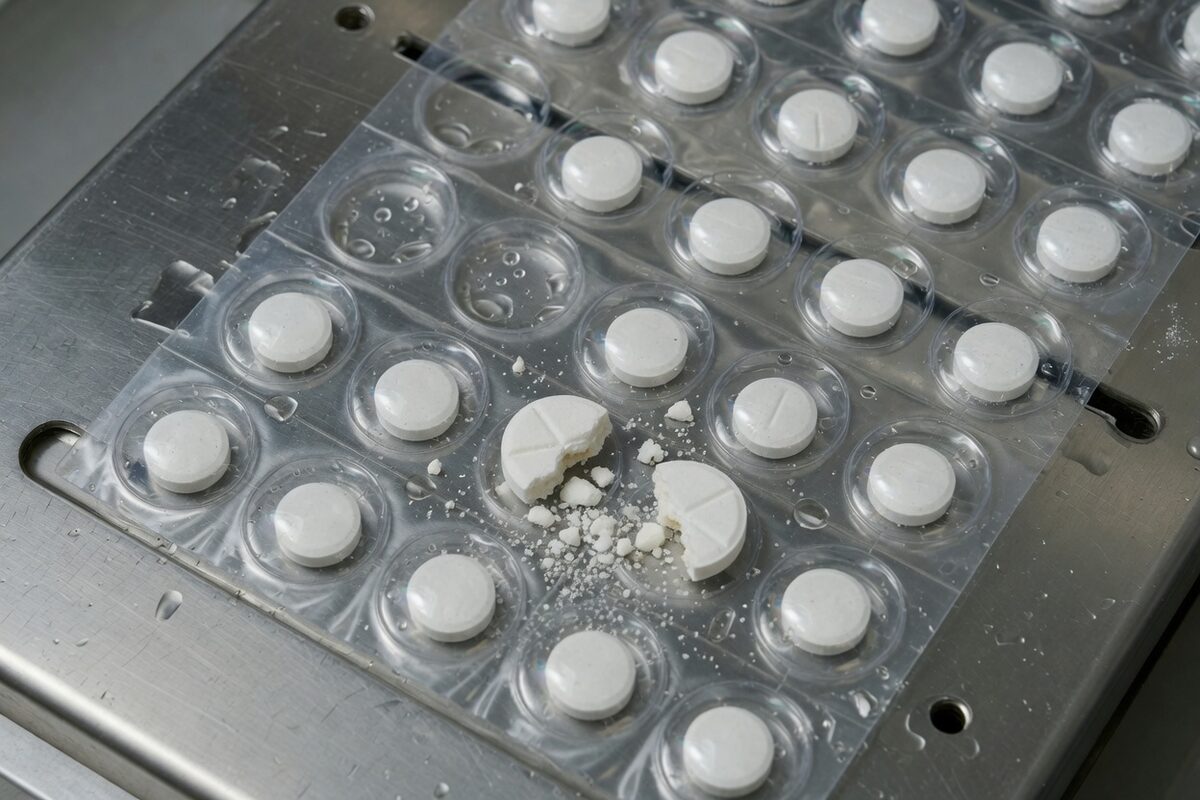
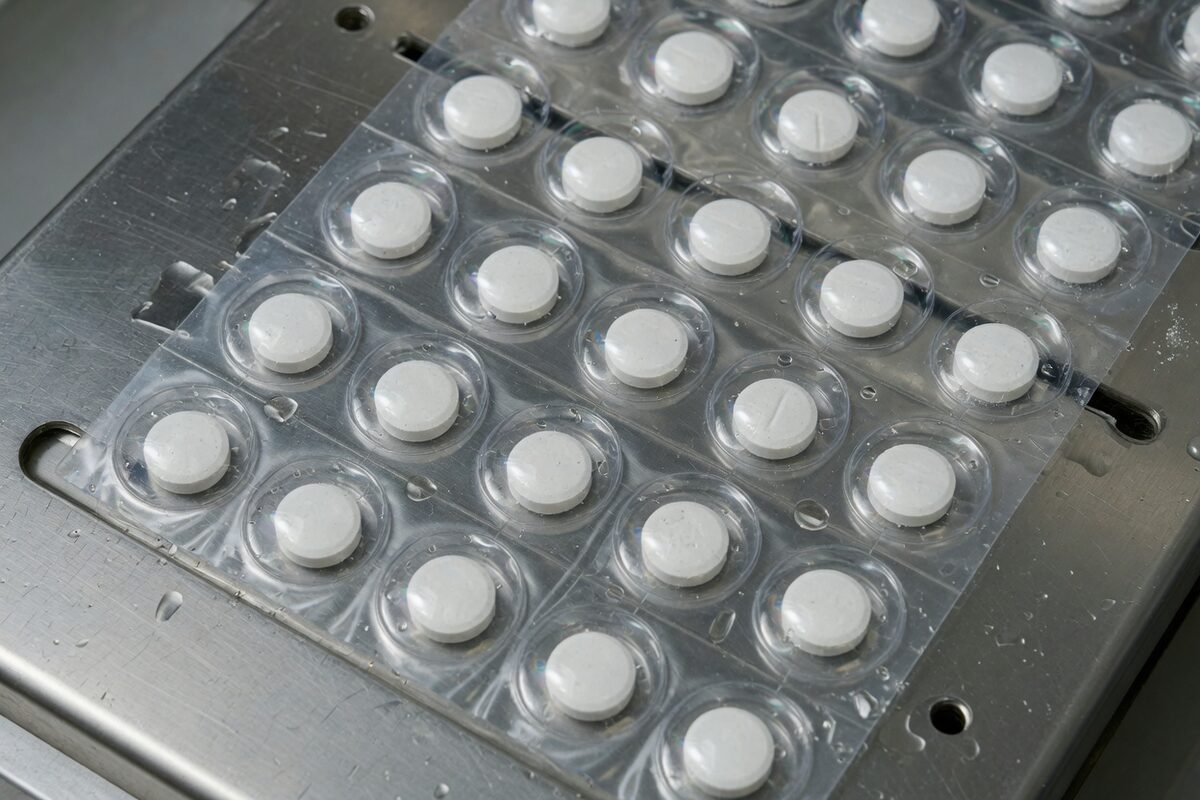
Missing or damaged product in blisters

A blister card with empty pockets and a tablet broken in half
The fault. Pockets are empty. A tablet beside them is broken in half.
A blister card with a whole tablet in every pocket
Still good. Every pocket has a whole tablet.

Presence and a judgment. An empty pocket is presence. A cracked tablet, on foil that already varies, is a judgment against examples of the tablet you ship.

How we fix it. The check is tuned to that product's color, shape, and surface, with a recipe for the changeover. A reject names the blister and the pocket, not just the carton it was going into.

Where this fits: Single-camera station

Label and insert verification

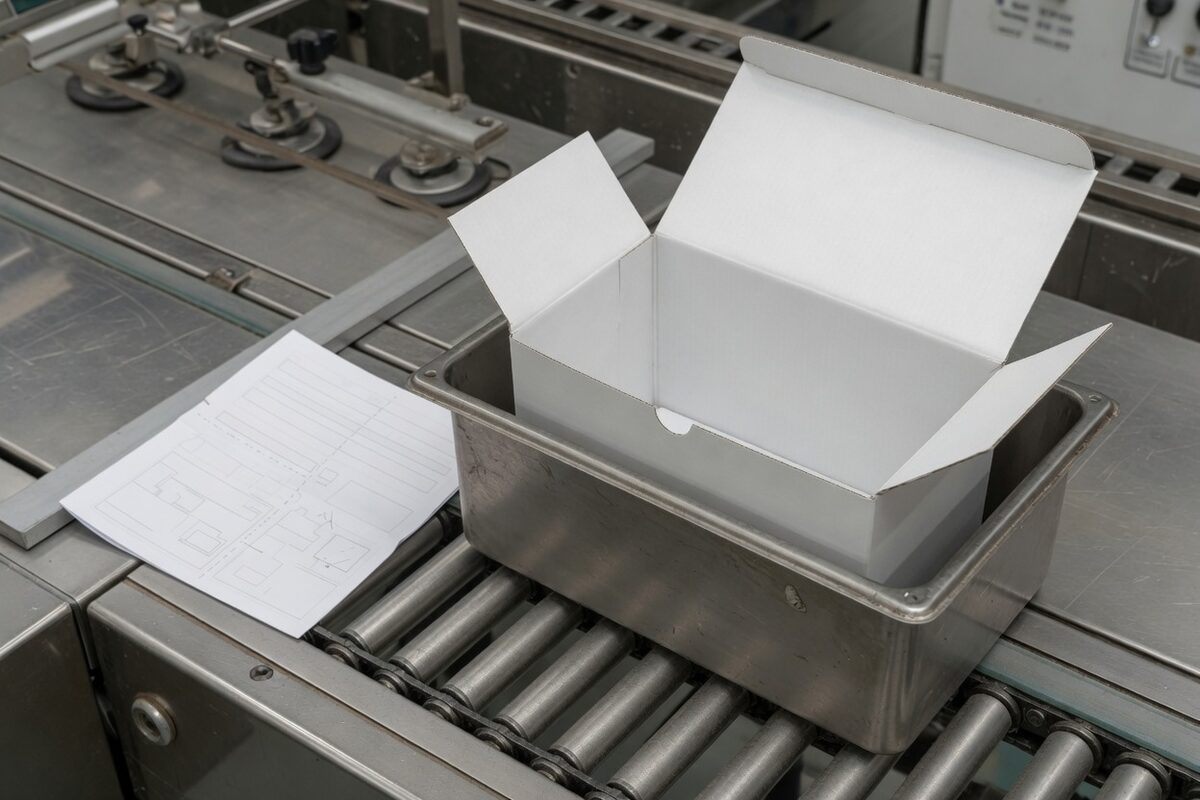
An open empty white carton with the folded leaflet sitting beside it instead of inside
The fault. The carton is empty. The leaflet is sitting beside it, not in it.
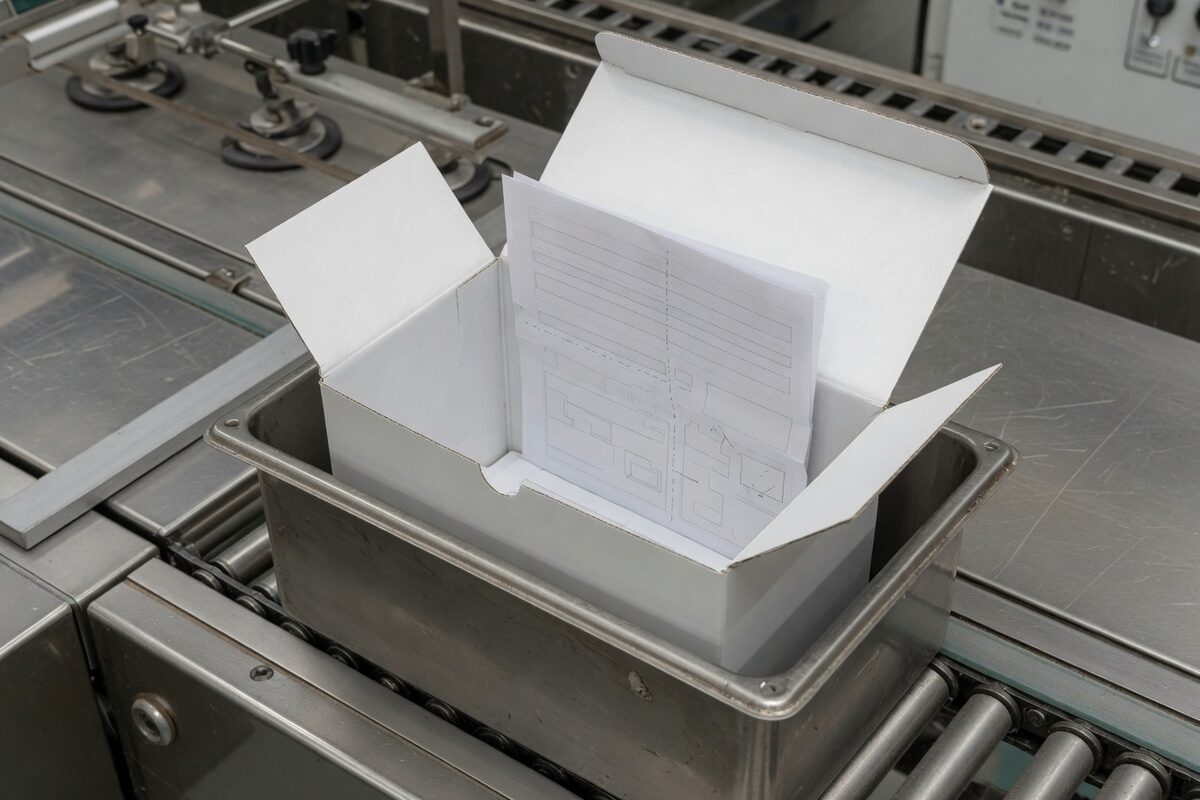
An open carton with the folded leaflet inside it
Still good. The leaflet is in the carton.

Presence and a match. The leaflet is in the carton or it is not. The text still has to match the batch. Those are two checks, and neither one is the batch record by itself.

How we fix it. Label, insert, and carton are checked against the batch in one decision. Barcode and text have to agree. Any mismatch holds the line.

Where this fits: Barcode station

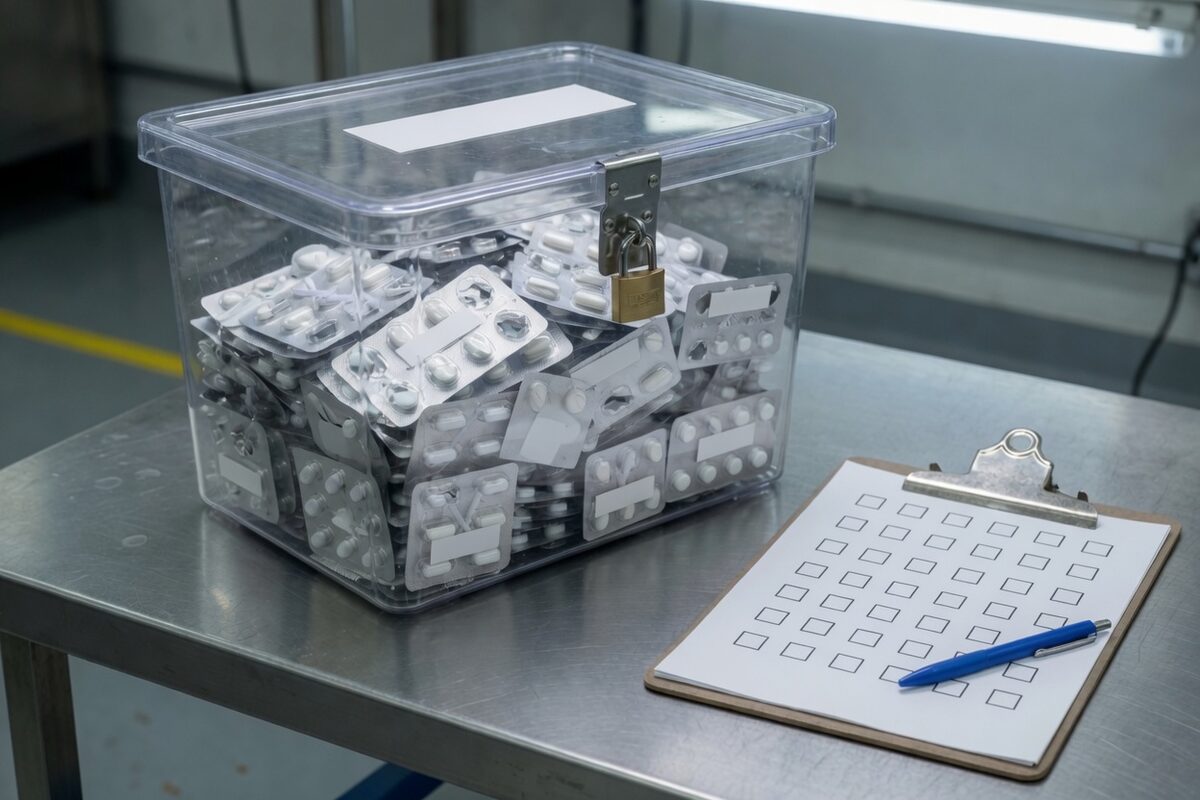
Reject records won't survive an audit

A blank record sheet
The fault. The record sheet is blank.
A record sheet that keeps a picture of a blister and check marks, with no words
Still good. The sheet keeps a picture of a blister and check marks. There are no words.

Record. The camera can be right and the sheet can still be blank. The reject keeps the image, the reason, and the time. Part 11 is planned with the plant when the room requires it. We do not hand over a validation packet.

That is a 21 CFR Part 11 problem even when the camera was right.

How we fix it. Every reject is logged with the image, the reason, and the time before the reject fires. Inspection settings keep an audit trail and access control. The documentation is what your validation team uses. We plan that with you when the room requires it.

Where this fits: How we inspect

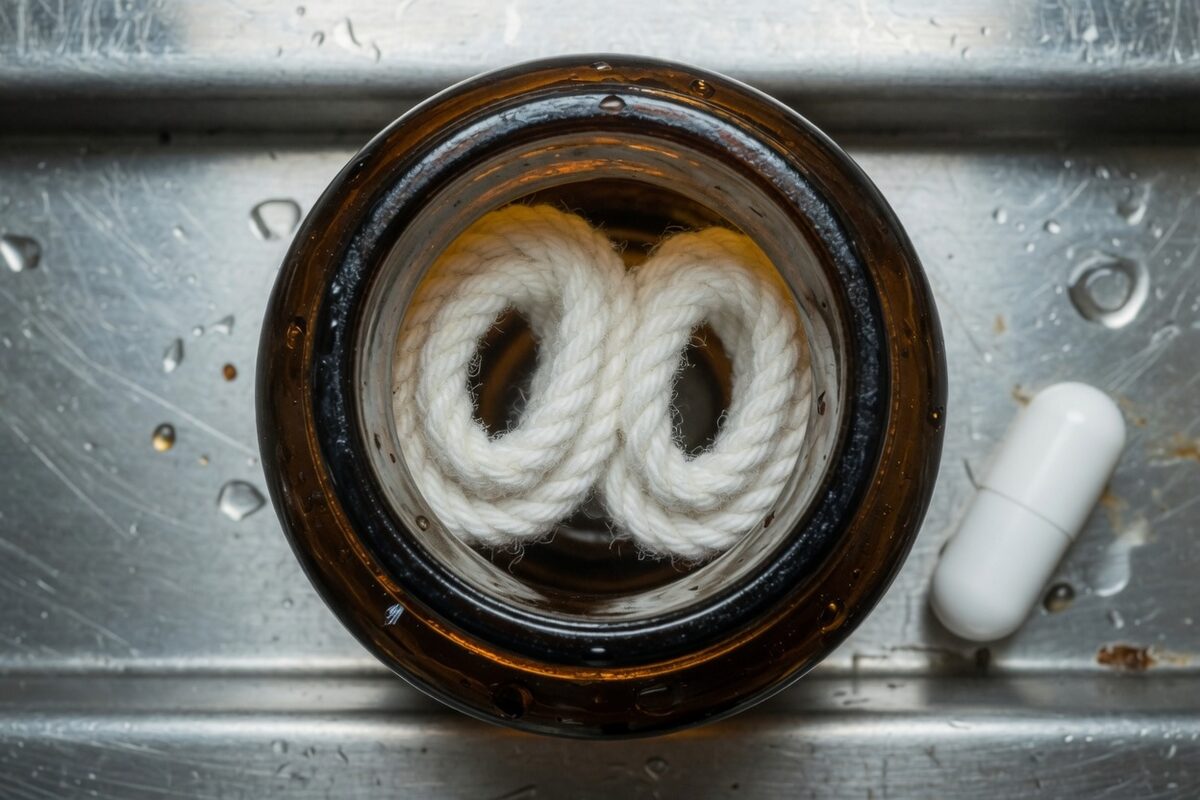
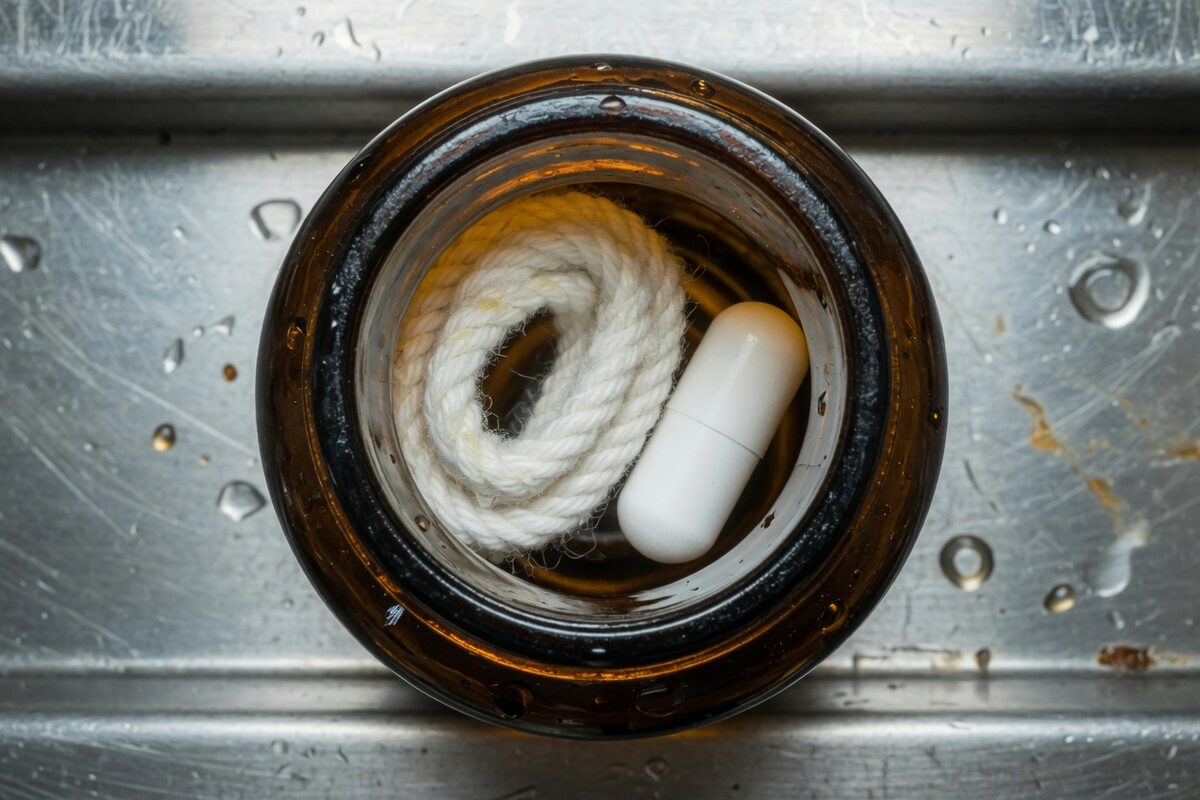
Desiccant or cotton is missing

Looking into an amber bottle with two cottons in the neck and the desiccant canister outside
The fault. Two cottons are in the bottle. The desiccant canister is still outside.
Looking into an amber bottle with one cotton and the desiccant canister in the neck
Still good. One cotton and the canister are both in the bottle.

Tell them apart. Cotton and a desiccant canister are different objects. A sensor that only sees something in the neck passes two cottons and no canister.

How we fix it. The station confirms the desiccant and the cotton are present, and only once, before the cap. A bottle that is missing one, or that has two, is rejected. The check is recorded with the batch. This is not the leaflet check.

Where this fits: Single-camera station

The station

How we stop it.

The camera result, the named operator at the HMI, and the log are written before the reject. Built for visual inspection rooms that already live under 21 CFR Part 211. Part 11 electronic records are planned with you on the system when the room requires them.

1 · See it

Check the pack against the batch

Tablet, leaflet, label, desiccant, and cotton each have a place in the recipe. A pass on the label does not imply the canister went in.

2 · Reject it

Keep serialization and the reject in one record

A unit that is rejected has to come out of the aggregation the same way it came out of the line. Two databases that disagree are the finding.

3 · Record it

Write the record before the output

Image, reason, and time are stored first. Settings changes are attributable. That is the record an auditor asks to see.

DSCSA serialization in the United States is the unit code plus the lot, the expiration, and the aggregation behind it. The FDA's DSCSA page is the rule. We tie verification to your serialization system. We do not replace it, and we do not hand you a Part 11 validation as a PDF at the end.

How it works

How inspection works on a pharmaceutical line.

  1. Check every pack against the batch. Tablet, leaflet, label, desiccant, and cotton each have a place in the product settings. Every pack is checked, not a sample.
  2. Decide pass or fail. Empty pockets and missing leaflets are presence checks. A cracked tablet or cotton versus a canister is judged against examples of what you ship.
  3. Reject and keep the record straight. A failed pack is rejected, and a removed unit is taken out of the case record the same way it came out of the line.
  4. Write the record first. The picture, the reason, the time, and the operator who signed in are saved before the reject fires.

What's included.

One team handles the job from the first sample check to a running station. We choose the camera, lens, and light for your fault, build the control panel, connect the reject to your line, and commission it with your operators.

  1. Vision assessment. A written check of your good and bad parts before any proposal. It tells you what the camera can catch.
  2. Line diagnostic. A later paid dry run of two to four weeks. The station watches real product with its outputs turned off, so nothing is rejected until it is proved.
  3. Install and commissioning. The station goes in on your line and is tested with your operators until it runs.
  4. Validation support. We support IQ/OQ/PQ (installation, operational, and performance qualification) with your validation team.
  5. Cleanroom work. We have installed and worked in cleanroom production areas, and plan the build around your room.
  6. Support. A yearly care agreement is available. See the system page.

Rules and words

Rules this line plans around.

These are planned with your quality team on the station. The station supports them. It does not replace your own compliance work.

DSCSA
The US Drug Supply Chain Security Act. Each package carries a unique serial number with its lot and expiration date, and the link between unit, case, and pallet has to be right. The camera reads the code into the serialization system you already run. We do not replace that system.
21 CFR Part 211
The FDA drug manufacturing rule (cGMP). It includes controls on labels and packaging, so the right label and leaflet go on the right product.
21 CFR Part 11
The FDA rule for electronic records and signatures: who changed what, when, and why. Part 11 is planned with the plant when the room requires it. We do not hand over a validation packet.

Words on this page, in plain terms.

Serialization
Giving each package its own unique serial number.
Aggregation
Linking each bottle's serial number to the case it is packed in, and each case to its pallet (the parent-child link).
Audit trail
A record that cannot be quietly edited, showing who changed a setting or overrode a result.
Batch record
The file that shows how one batch was made and checked.
Desiccant
A small canister or packet that absorbs moisture in the bottle.
HMI
The operator screen on the line.

What plants are reading

From the trade press.

The code, the blister, and the insert that is not a tablet. Cotton and a desiccant are not the same object.

Packaging Strategies · Nov 20, 2025

The code on the pack has to match the record.

Packaging Strategies walks through pharmaceutical serialization after the DSCSA stabilization period: the NDC, the serial, the lot, and the expiration, in human-readable text and in a Data Matrix. The line problem is printing that code and proving it, then keeping the parent and child linked.

Packaging Strategies

Pharma Now · May 18, 2025

Serialization on the blister is a camera problem.

Pharma Now's manufacturing piece treats blister serialization as print, light, and a camera that can verify the Data Matrix at line speed, then hand the result to the system of record. A code that only looks fine to a person is not a verification.

Pharma Now

Ecobliss Pharma · Sep 16, 2026

Cotton is not a desiccant.

Ecobliss spells out the difference packaging teams already know and sensors often ignore. Cotton fills space so tablets do not break in transit. A desiccant controls moisture. A bottle insert also cannot do the job of a seal that does not close. Both still have to be present, and only once, when the recipe calls for them.

Ecobliss Pharma

Questions

Common questions.

Do you replace our serialization software?

No. The camera reads and checks the code, and the result goes into the serialization system you already run.

Do you provide validation support?

Yes. We support IQ/OQ/PQ with your validation team, and Part 11 is planned with the plant when the room requires it. The station keeps the image, reason, time, and audit trail. We do not hand over a validation packet.

Can it change over between products?

Yes. Each product has its own settings for color, shape, and the foil, loaded at changeover.

Can you work in a cleanroom?

Yes. We have cleanroom experience and plan the build and install around your room.

Where do we start?

Send good and bad packs for a vision assessment. You get a written answer before any proposal. The diagnostic, a paid dry run with outputs turned off, comes later.

Next

Tell us about the line.

Tell us the dosage form, what is getting into the wrong pack, and whether the record has to survive an audit. If a station is already rejecting and the log cannot show why, start there.

Tell us about the line Line diagnostic

A blister card with a whole tablet in every pocket