
A vision system catches double seam defects by imaging every can as it leaves the seamer and measuring the visible seam, mainly seam height, against the can supplier's specification. Any can outside the window is rejected. A run of rejects also tells maintenance that the seamer's rollers or chuck are drifting, so they can correct it before a full batch goes bad. The camera doesn't replace the teardown checks your closure program requires. It covers the cans that run between those checks.
Why does manual seam sampling miss defects?
The line in this story is a food canning line running 600 cans per minute. Before the retrofit, it had no inspection system. Operators pulled a can every 100 to 1,000 cans and measured the seam by hand with a caliper.
Manual sampling like this is normal practice. For low-acid canned foods, FDA's rule at 21 CFR 113.60[1] calls for a visual seam check on a can from each seaming head at intervals that should not exceed 30 minutes, and a teardown examination at intervals that should not exceed 4 hours. The rule sets how often seams are examined and what gets measured. The dimensional limits come from the can supplier.
The weak point is arithmetic. At 600 cans per minute, a sample every 100 to 1,000 cans means one measured can every 10 seconds at best and every 100 seconds at worst. At 1 in 1,000, 999 cans pass without anyone measuring them. If a seam starts to go out of spec just after a check, everything until the next check carries the same problem.
Why do double seams drift out of spec?
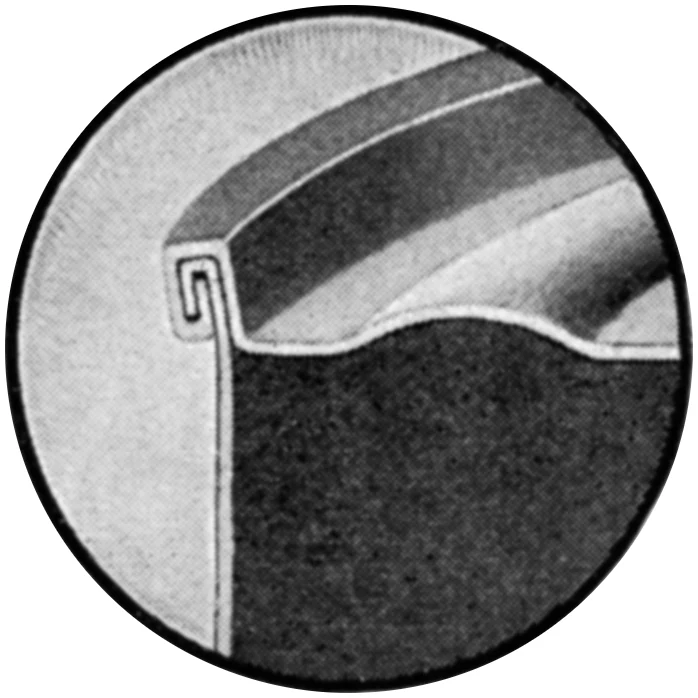
A double seam is formed in two steps. A first-operation roller curls the end's edge around the can body's flange, and a second-operation roller presses the fold tight, with the chuck holding the end from inside. Rollers wear, settings shift, and a chuck can wear or get damaged. It rarely happens all at once; seam dimensions creep.
That creep is what you want to catch. According to AFDO's guide to can defects[2], a worn or badly set second-operation roll can leave a loose seam that may leak, and roll wear and pressure settings are what finally set the seam's shape and dimensions. A seam that is too tall or too short is a sign the fold didn't form right and may not seal. A can that doesn't seal can leak or let contaminants in after processing, and that product has to be held or destroyed.
What did JM Automated Solutions install on this line?
The system JM Automated Solutions built for this line has five cameras:
- Four side cameras, spaced around the can, so together they see the full 360° of the seam.
- One top camera, looking down on the end to check that the seam is circular.
- A custom dark-field light. Dark-field lighting comes in at a low angle, so flat surfaces stay dark and edges light up. On a seam, that makes the top and bottom edges of the fold stand out sharply, which is what you need for a repeatable measurement.
The pass-fail metric is seam height, measured in thousandths of an inch around the whole seam and compared with the can supplier's limits. Each supplier sets the target and tolerance for its own can and end. As a reference point, one published industry table[3] lists a standard seam length (another name for seam height) of 0.115 in. (2.90 mm), and about 0.102 in. for reduced "mini" seams. Too short fails. Too tall fails. A failed can goes to the reject, and the image and measurement are saved with the reason.
What can a camera measure on a double seam, and what can't it?
On this line, the cameras measure from outside:
- Seam height around the full circumference
- Seam uniformity, so a seam that varies around the can stands out
- Circularity, from the top view
- Visible signs associated with leaking seams: outside defects such as droops, sharp seams and cutovers, the kind of gross closure defects listed in FDA's canning inspection guide[4]
- V-shaped dents on the rim, seen from the top view, where a can has struck another object
A camera cannot see inside the seam. Body hook, cover hook, overlap and tightness are internal dimensions. They still need a teardown with a micrometer, seam saw or seam projector, done by a qualified person on the schedule in the plant's closure program. The vision system adds a 100% check between those teardowns. It supports the plant's food safety program and the testing FDA requires. It does not replace either one.
How does a run of rejects signal seamer wear?
One rejected can is a bad can, and the reject handles it. Several rejects in a row mean something else: the seamer is drifting.
The system watches for that pattern. When it sees a run of consecutive rejects, it alerts maintenance to check the rollers and chuck. The crew fixes the cause before a teardown hours later, or a customer, finds it.
What happened when the alert fired?
On this canning line, the seamer alert paid for itself. A run of seam-height rejects led maintenance to a worn second-operation roller or chuck on the seamer, and they corrected it before the batch finished. Only a partial batch was affected. How much was saved depends on how fast operators react to the alert. Under the old sampling plan, the next manual check could have been up to 1,000 cans away.
What that batch could have done is clear: leaking cans, spoilage, possible contamination, and a recall. If FDA judged there was a reasonable chance of serious health consequences, that would be a Class I recall[5], the most serious class.
What does a Class I food recall cost?
Industry estimates put the direct cost of a Class I food recall at $2 million to $5 million, and $10 million to $30 million once brand damage and lost sales are counted.
Illness costs are separate. USDA's Economic Research Service estimates the average cost of one foodborne botulism case at about $2.1 million[6] per person (2023 dollars), the kind of illness canned food rules exist to prevent.
What changed after the retrofit?
- Before: no inspection system. Seams were checked by caliper on one can in every 100 to 1,000, so defects were caught only if they landed in a sample.
- After: 100% of cans inspected, and every can outside the limits is ejected.
- Downtime: we estimate, conservatively, 2 to 4 hours of unplanned seamer downtime avoided per month. It's an estimate; the real figure depends on the plant's maintenance logs.
- Payback: by our estimate, a single avoided recall would pay for the system roughly ten times over.
Want to know if it works on your cans?
Send us a few good cans and a few with seam problems, along with your can supplier's seam spec. We'll tell you in writing whether a vision system can measure what you need on your line, before any proposal or price. Book a call or send JM Automated Solutions a message.
Sources
- eCFR: 21 CFR 113.60, Containers
- AFDO: A Guide to Can Defects and Basic Components of Double Seam Containers
- Canmaking tech tip: double seam dimensions table
- FDA: Guide to Inspections of Low Acid Canned Food Manufacturers, Part 3
- FDA: Recalls background and definitions
- USDA ERS: Cost estimates of foodborne illnesses