
Seals and pouches
Open seals, product in the seam, or a channel in a pouch. See Food and the medical device pouch seal.
Fill, seal, cap, count, placement and damage, checked on every pack, with a reject timed to the pack and confirmed when it fires.
Problems
Open seals, product in the seam, or a channel in a pouch. See Food and the medical device pouch seal.
Packs and bottles under- or over-filled. See Food and Beverage.
Short packs, cases, and kits. See Food, Packaging and Medical devices.
Missing, skewed or wrinkled labels. See Beverage.
Cracked or dirty empties. See Beverage.
Shape, color, breakage, bloom, and enrobing. See Food.
How it works
Faults that show from one side: fill, seal, presence, count.
Faults that can be on any side: wrapped labels, caps, cosmetic marks.
The reject is timed to the part and confirmed when it fires.
Every reject logged with image and lot. See Traceability.
Pass or fail
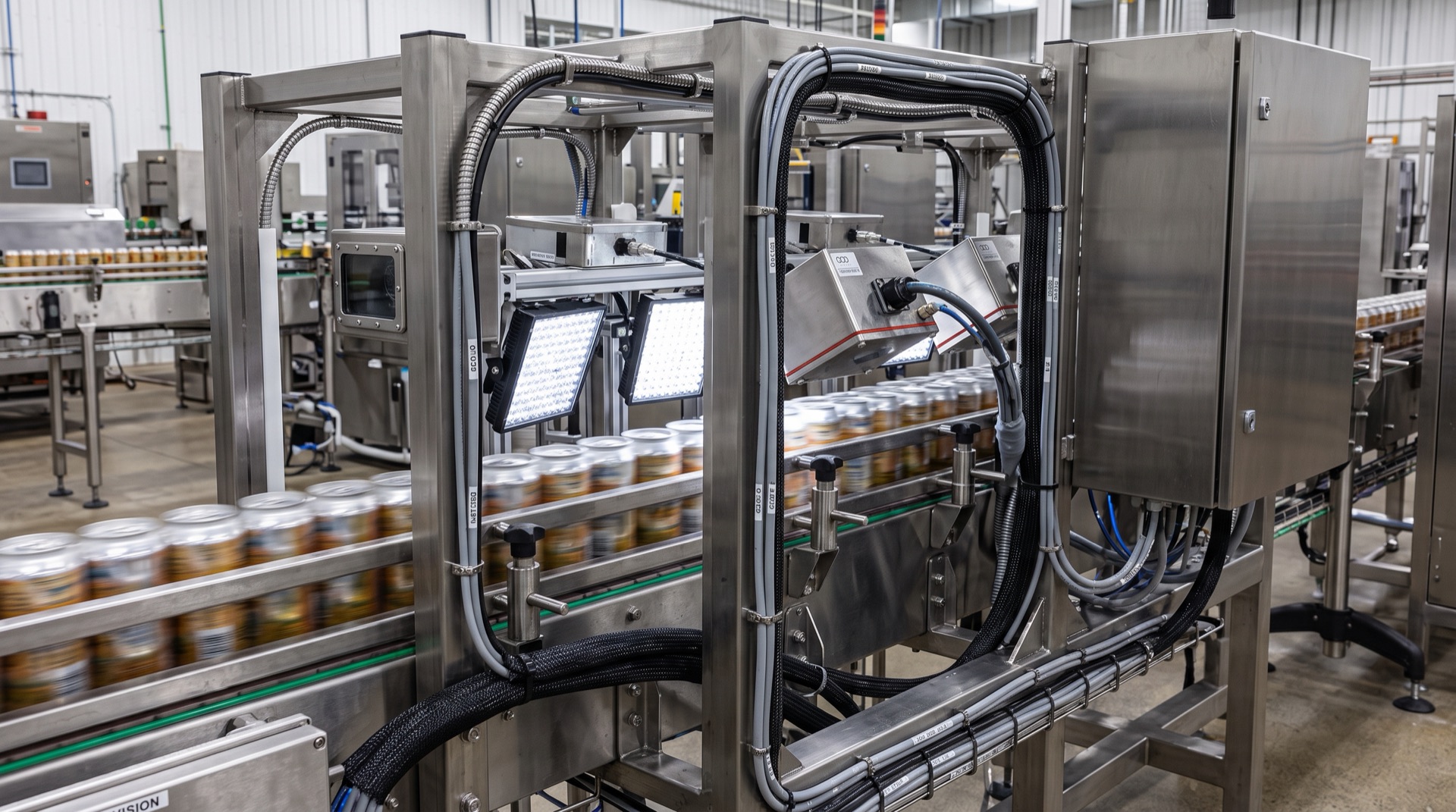
A photo eye or encoder triggers the camera, and a short strobe freezes the moving pack. Filters even out brightness and noise when the check needs it.
The software finds the pack, so the checks land in the right place on a pack that arrives turned or off center.
Pixels become numbers: fill height, piece count, seal width, the size of a mark.
Each number is compared with limits set from real good and bad samples. A fail fires the reject when that unit reaches it, and the image and reason are saved.
Rule-based tools suit measurements, counts, and presence, and each reject traces to a limit. Deep learning suits faults that vary in look, such as cosmetic marks and wrinkles, and trains on many labeled pictures. Many stations use both. See How machine vision works.